
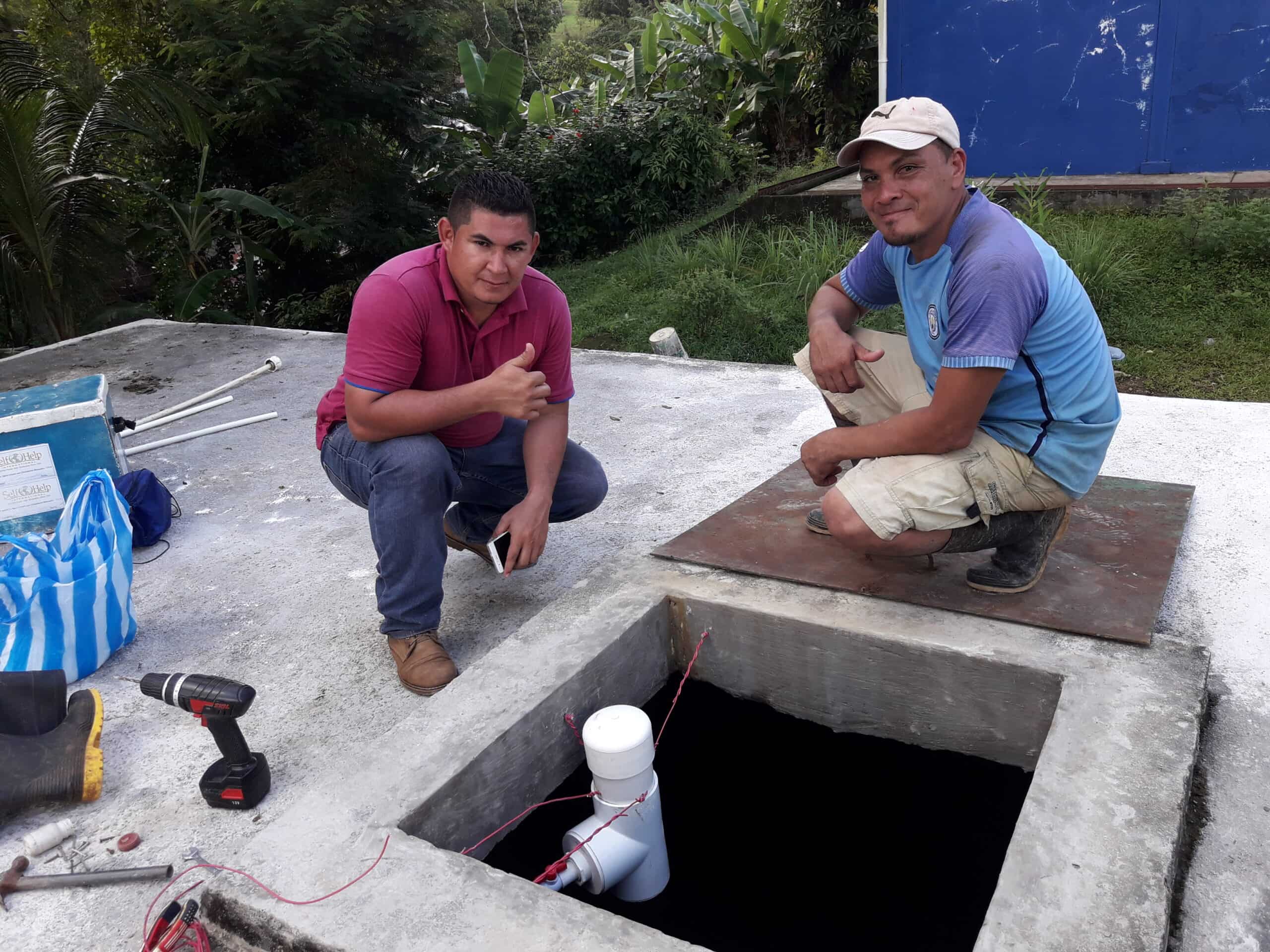
Water is the most important resource on planet Earth, so essential for life yet so vulnerable to contamination.
For many years, Self-Help International has partnered with rural communities in Nicaragua to expand access to safe drinking water, giving them the training and equipment to purify (disinfect) it and distribute it to homes, without compromising health.
When the project first began, there was only one model of chlorinator, made with PVC (polyvinyl chloride) materials and fittings. The design, provided to Self-Help by Compatible Technology International (CTI-8), worked very well in chlorinating water, but it did not always fit well with the characteristics of aqueducts in the tropical region.
In rural Nicaragua a typical water system consists of the water source (spring, well, or river), a water intake (which may or may not be filtered), one or more water tanks, and pipes. The systems themselves often differ, depending on the available water resources and topographical conditions. The variability in the characteristics and components of the community water systems sometimes make the installation and implementation of water chlorination devices difficult.
For this reason, Self-Help International has undertaken the task of seeking ways to innovate the water chlorination equipment.
To address the technical difficulties with installing the common CTI-8 chlorinators, the equipment was modified to the conditions and specific characteristics of each rural water system.
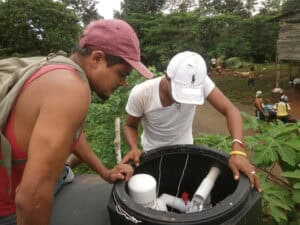
The process starts with assessing all the conditions of the water systems through technical inspections, during which it is determined whether it is necessary to change the chlorination equipment. If it is discovered that there are technical incompatibilities for the installation and operation of tablet chlorinators, adaptations are made in shape or design, installation, or operation so that they can adapt to the unique characteristics of community water systems.
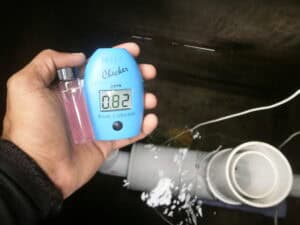
In some situations, the adapted chlorinator is implemented either inside or outside the water receiving and distribution tanks. These chlorinators are widely successful; readings of residual chlorine average 0.82ppm, which demonstrates the complete disinfection or purification of the water distributed to homes.
In some cases, it is not feasible to install the chlorinator in the pump house of the wells, so the innovation of the chlorinator has been coupled with water inlet pipes that can regulate the flow of water coming from the wells. This allows the efficient mixing of chlorine, ensuring all the water that enters the distribution tank is potable.
In other cases of innovation, the chlorinator is modified using PVC reducers and adapters so that the flow of water is continuous, regulated by a valve to achieve the correct erosion of the chlorine tablet. This ensures there is a sufficient quantity of chlorine to make the water that circulates in the system potable.
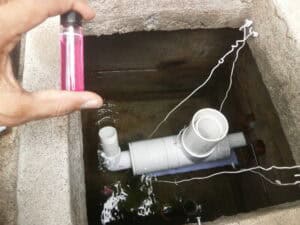
Now, chlorinators with dual discharge are being designed to chlorinate all the water in the system at the storage tank and distribution point; simplified designs for small tanks are also available. With capacities ranging from 400 liters to 2,500 liters of water for distribution, this compact chlorinator was designed to work with pressurized water circulation, primarily in water systems with electric pumps where the installation of free-discharge chlorinators has been difficult.
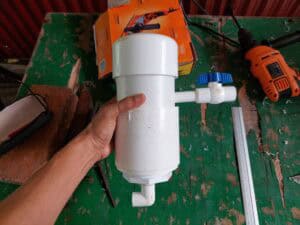
The operation of the pressure chlorinator has been excellent, efficiently distributing and mixing the chlorine in the water distribution tanks.
With the opportunity and flexibility to redesign and innovate chlorinators to meet the characteristics of each aqueduct and water system, thus benefiting people, Self-Help International no longer sees the conditions of water systems as a challenge. Instead, we study the conditions and seek to design a chlorinator that meets the needs of each system.
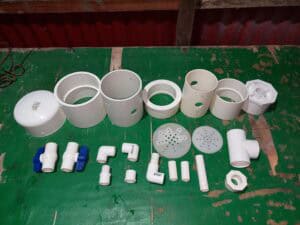
New chlorinator designs that Self-Help International has made brought clean water to 813 homes and benefitted an additional 4,370 people.
Powered by Wapiti Digital #servetheherd
The Self-Help International Board of Directors will match 50% of all gifts and pledges received September 1-30, 2026, up to $80,000 or until funds run out.

This is my rich text.
This is more rich text.
I am a list
Lists are cool