
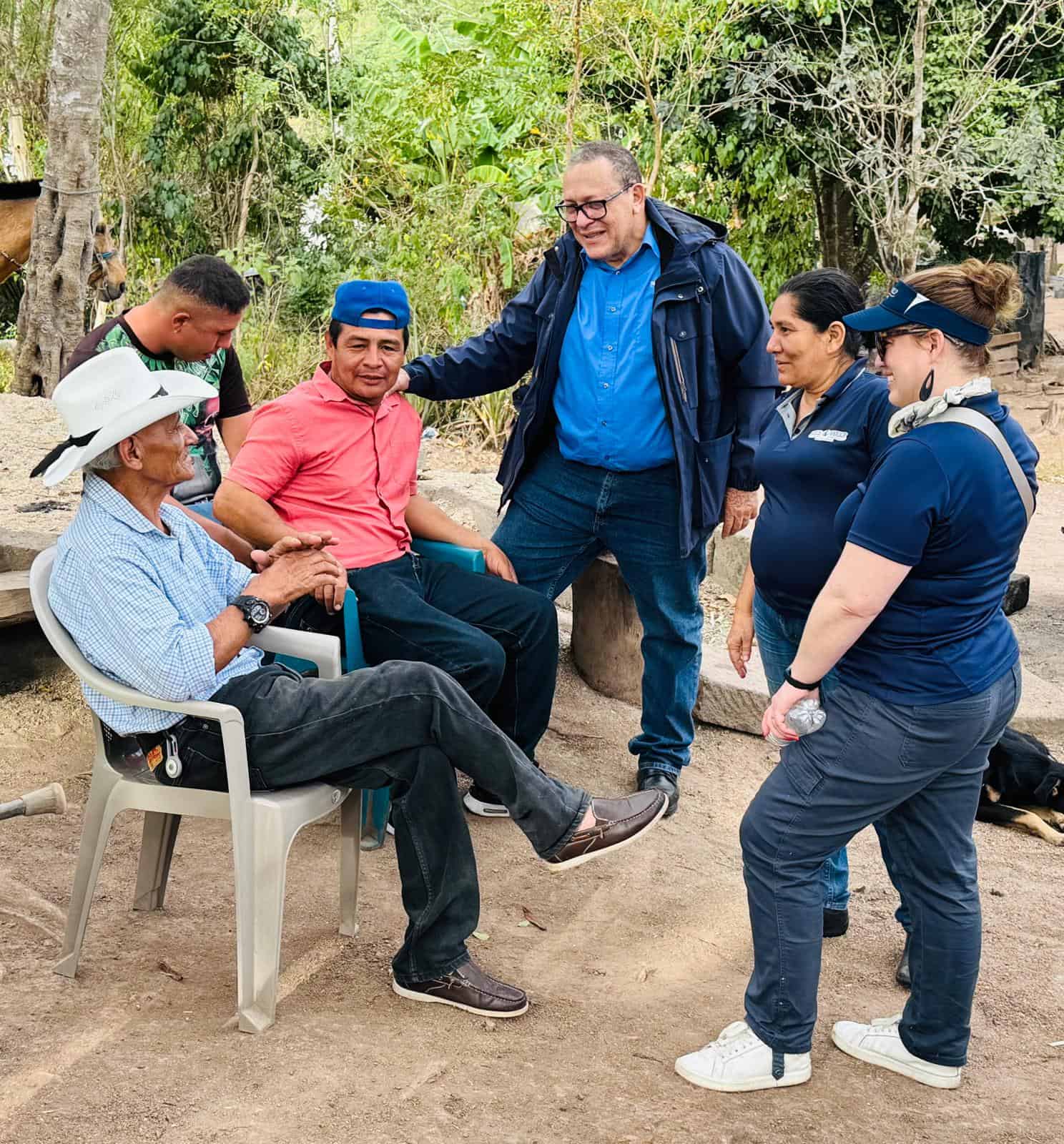
Our people exist, live, suffer and struggle to root themselves to the land, their communities; all of them shape their own ways of life to survive and help each other.
For the past twenty-six years, Self-Help International Nicaragua has been adapting our programs to best meet the needs of the people we serve.
The government of Nicaragua frequently publishes new laws regulating non-profit organizations. At the beginning of 2025, this created some uncertainty within our organization, but we continued our operations in the territories. Ultimately, we were found in compliance.
In my humble opinion, statistics are cold, insensitive numbers; they don’t know the suffering, anguish, and pain caused by the loss of crops for a small farmer, or the failure of a woman’s business, or a pandemic or disease caused by the lack of clean water in a rural community; they are simply statistics. Our programs go beyond solving common problems: the scenarios are changing and require innovation and expertise to find real solutions that help people and their leadership.
When a woman’s life is improved, the lives of her children and her family are improved. In 2025, 68 women, with their small businesses, showed great responsibility by achieving a very high rate of return on the revolving loan fund. In mid-2025, a new Women’s Empowerment Program Officer was hired in San Miguelito, extending support to nine new communities and 194 women for the first time.
Rural aqueducts and community water systems are constantly facing sanitation crises (flooding, organic matter contamination, turbidity, suspended colloids, etc.). The chlorinator technology we promote is effective at both correcting biological contaminant loads in emergencies and preventative chlorination. In 2025, the extension technicians of the Clean Water Program trained and educated more than 300 managers in the technical aspects of water chlorination for 12,384 homes.
Among farmers, collaborative learning is based on exchange and trust. It begins with understanding the genetic material of new varieties of corn, beans, rice, wheat, vegetables, roots, and tubers, and continues through to harvest. It starts by establishing an experimental demonstration plot with different planting arrangements, cultivation methods, and agronomic management. At the end of the year, 569 farmers were working along with Self-Help International, among them 103 women and 466 men.
Agriculture faces a high climate risk in the territories of Palacaguina and Condega in the north, and so we requested a new variety of early-maturing corn (90–100 days) from the International Maize and Wheat Improvement Center (CIMMYT).
Living a good life is more important than any political, social, ideological, or religious conflict. We are proud to be part of this organization and to work with all our partners and clients to help them achieve a good life. We will continue to maintain close collaboration with all government institutions, respecting the law and its precepts, without losing sight of our mission and vision to continue helping the people who choose to work with our programs in the most vulnerable territories.
Jorge Luís Campos Solís, Nicaragua Country Director
Powered by Wapiti Digital #servetheherd
The Self-Help International Board of Directors will match 50% of all gifts and pledges received September 1-30, 2026, up to $80,000 or until funds run out.

This is my rich text.
This is more rich text.
I am a list
Lists are cool