
In Ghana’s Upper West Region, where agriculture is most people’s primary livelihood, climate change is shortening growing seasons and limiting food production. The problem is compounded by labor scarcity caused by out-migration and a lack of capital that makes investing in mechanization difficult.
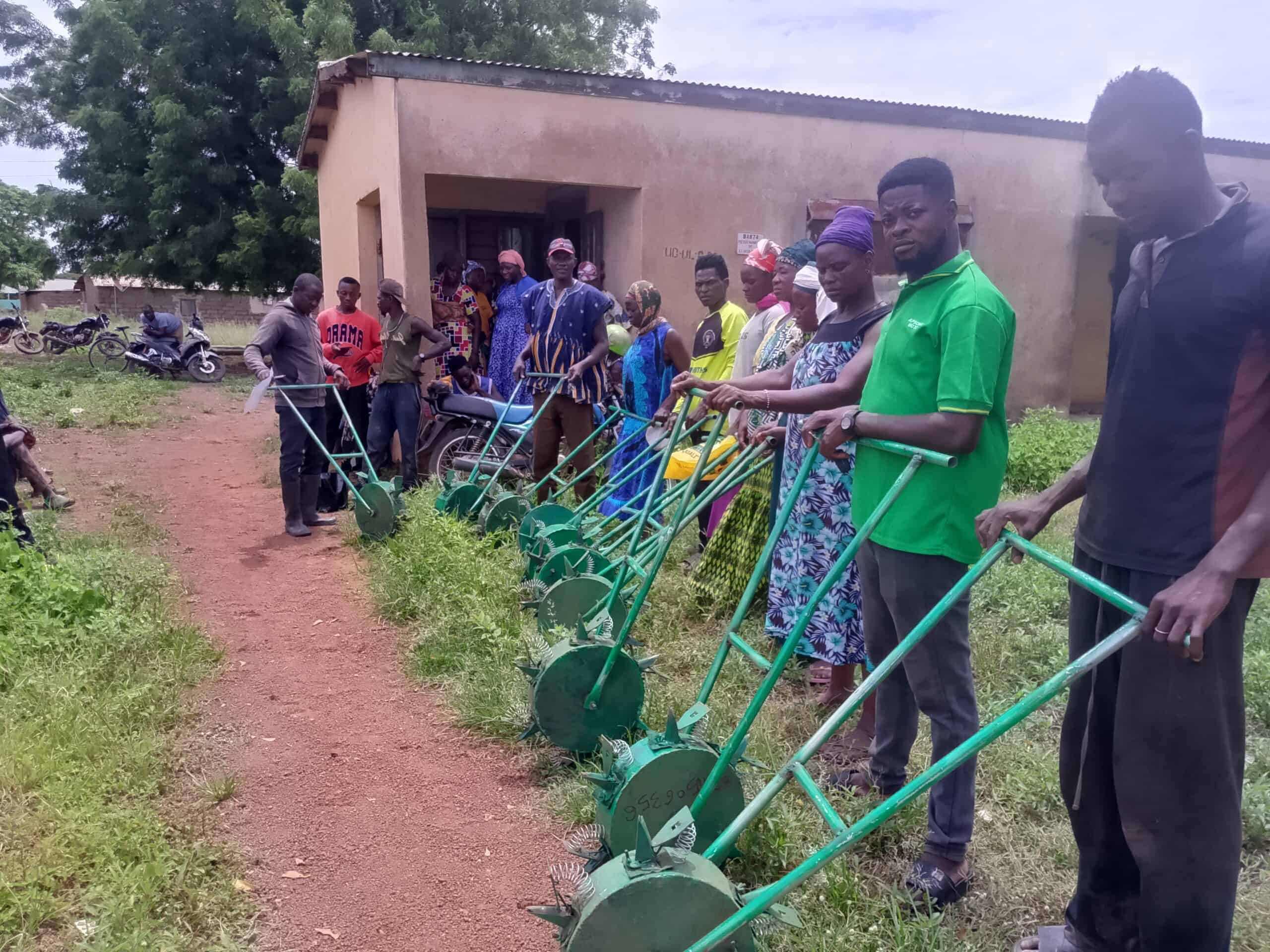
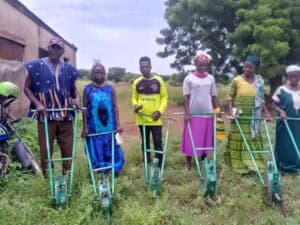
In an effort to solve these problems, in August 2026 Self-Help International, which has worked in the region for the past five years, distributed metal push planters to 23 farmers – including women – through its microcredit loan program. An additional 32 farmers purchased planters from Self-Help International outright.
The planter can sow nearly all the crop seed types Self-Help International farmers grow — maize, rice, sorghum, soybean, bambara beans, cowpea — with an adjustable mechanism to control seed release rate and spacing.
Metal units are expected to last for many years, and can be repaired locally when something breaks.
Planters enforce row planting with controlled spacing, which supports the line-planting and seed-spacing practices Self-Help International already trains farmers on. Proper depth of insertion is also improved.
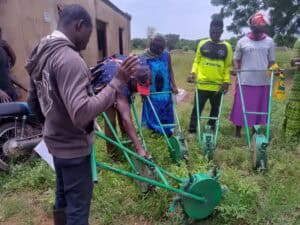
Lawrence Zongo, Self-Help International’s Community Crop and Livestock Specialist, personally trained every recipient before handing over a planter, and farmers who run into problems afterward call him for follow-up guidance.
The push planters are expected to reduce dependence on scarce, costly hired labor. One trained person can plant roughly 1-1.5 acres a day using a planter — comparable to what would otherwise require around ten hired laborers.
They will also provide greater climate resilience, since farmers can get fields planted more quickly after rainfall, before conditions shift.
Ultimately, the push planters distributed by Self-Help International will increase crop yields and food security in the Upper West Region, especially for women farmers.
Powered by Wapiti Digital #servetheherd

This is my rich text.
This is more rich text.
I am a list
Lists are cool