
By Ernestina Esinam Glikpo, Communications Manager
In many parts of Ghana, food insecurity isn’t just a challenge—it’s a daily reality. But in some parts of the Ashanti Region, a movement is growing, and it starts right in women’s backyards.
Over the past few months, Self-Help International’s Microcredit and Agriculture Entrepreneurship Development teams have trained more than 85 women from five communities—Kwaso, Bedabour, Wrapong, Asuogya, and Abompe—to turn small plots and containers into vibrant home gardens.
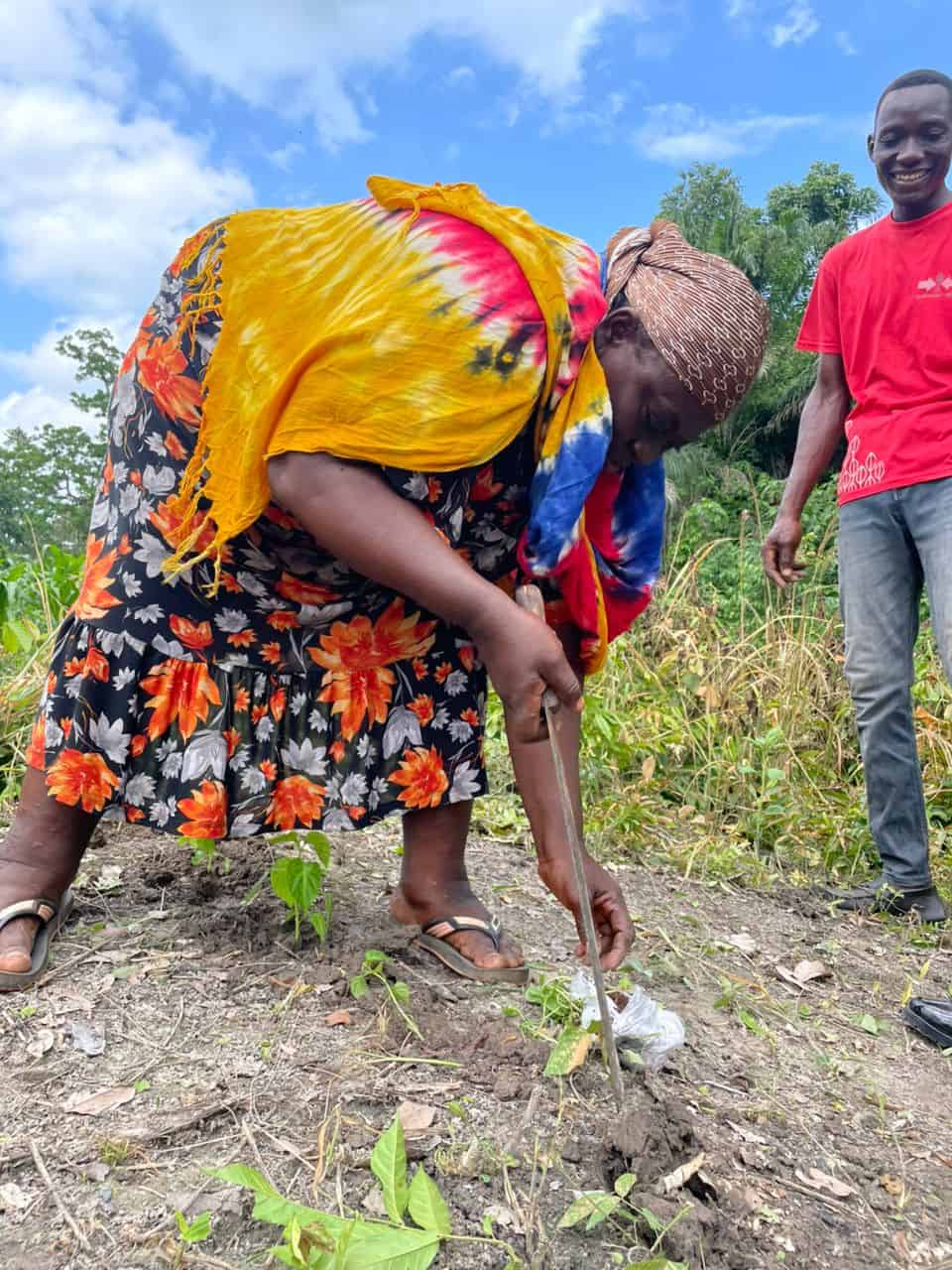
Through hands-on workshops, the women learned every step of the process: selecting the right garden site, designing an efficient layout, managing nurseries, transplanting seedlings, identifying pests and diseases, and even making their own organic pesticides. For those with limited land, container gardening opened the door to fresh, homegrown food.
Each workshop participant also received vegetable seeds—18kg (39.68 lbs) in total—including seedlings of pepper, tomato, aubergine, and African eggplant, as well as seeds of amaranth, jute, kenaf, okra, and cucumber, many nurtured in Self-Help’s own demonstration field.
For women like Ayishatu from Worapong, the training was eye-opening. “I’ve been farming for years, but I had never planted in rows. Learning to line and peg will make such a difference,” she shared with a smile.
A few weeks after the training, the Self-Help team visited three of these new gardens, and the results are already visible. Plants like okra, cucumber, jute, amaranth, kenaf, and leafy greens are now taking root in family gardens across the region.
And the training is just the beginning. As more women gain the skills and resources to grow what they eat, their families grow stronger, and their communities become more food secure.
Powered by Wapiti Digital #servetheherd
Register today for the Annual Spring Luncheon!
Join us to hear first-hand from Self-Help International volunteers and staff who have recently returned from trips to Ghana and Nicaragua, and how, together, we are growing our impact in both countries.

This is my rich text.
This is more rich text.
I am a list
Lists are cool