
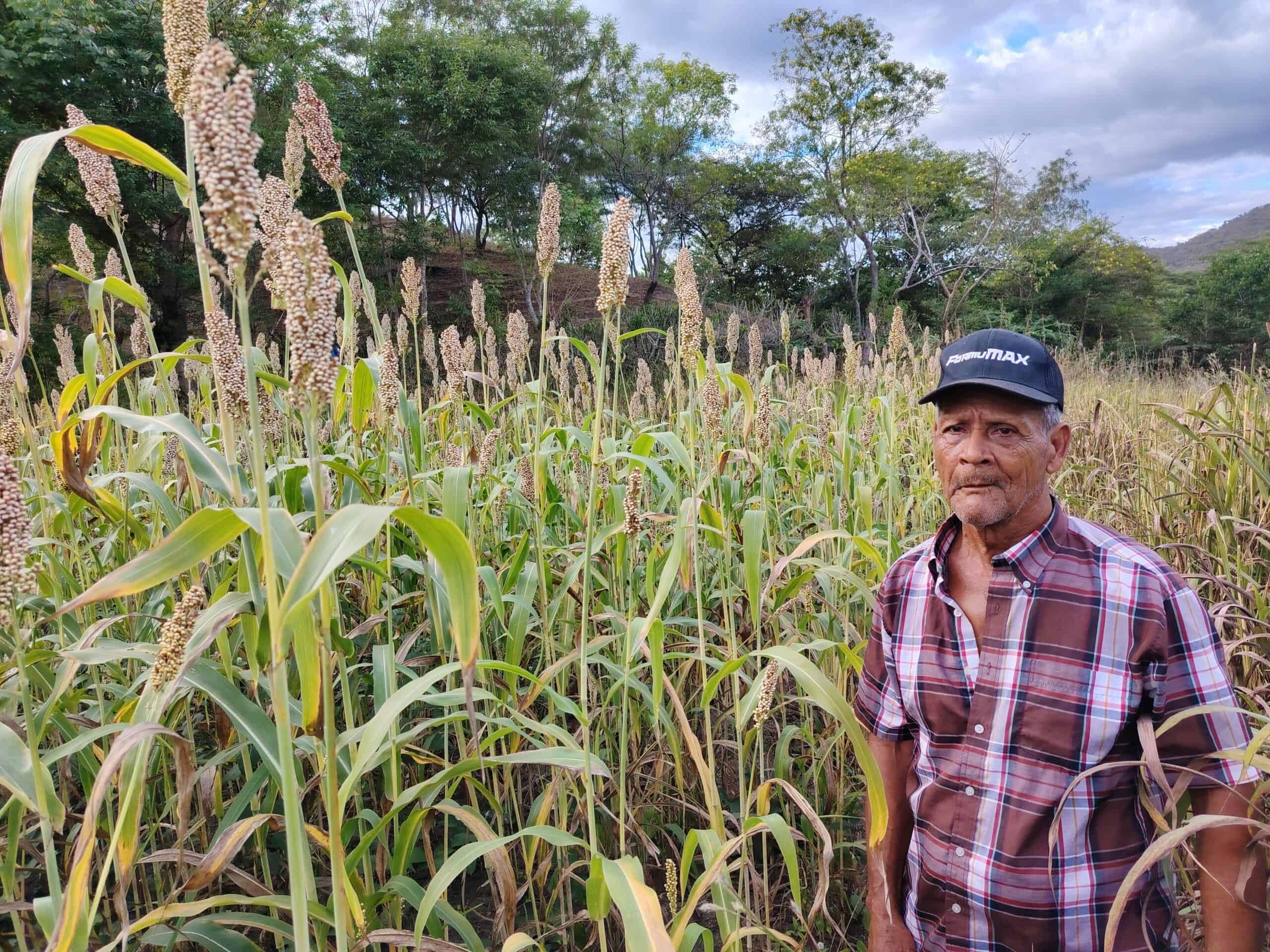
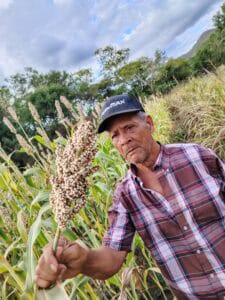
Teodoro is a 75-year-old farmer from the community of La Tuna, just west of the municipality of Palacagüina in the state of Madriz in northern Nicaragua.
Although Teodoro learned agriculture alongside his father from a very young age, at age 17 he decided to become a bricklayer. However, he always maintained the hope that he would one day own a piece of land where he could farm.
As years passed, Teodoro understood that the only way to achieve his goals was by saving for the future. He started by investing the money he earned from his work into the purchase of his first cows, which he fed on a rented piece of land. Then one day, a property of 1.70 acres came available to purchase; without hesitation, Teodoro bought the property.
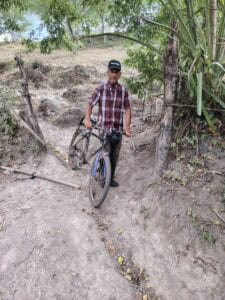
Over time, opportunities arose for him to buy more land. Eventually, Teodoro owned 17.41 acres. He uses 4.33 acres for crop production purposes and the remaining of 12.98 acres as pastureland where he feeds his current herd of five cows.
Teodoro joined the Self-Help International Agriculture Program last year. “I was given INTA Nutrader corn, INTA Bioapante bean, and sorghum seeds,” Teodoro explains. “My son and I planted all the seeds following the technician’s instructions.
“We planted the corn using the double-row technique, but to be honest, I followed the process with some doubt because, since it doesn’t rain much in this northern part of the country, my family and I thought this planting would be a loss because usually a lot of water is needed to get a good yield. But this corn variety, promoted by Self-Help International, surprised us. The winter here was as irregular as always since the rains stopped during the flowering and grain-filling stage. Even so, the corn resisted and survived all the hardships, yielding enough this year to eat boiled corn on the cob, tamales and güirilas (sweet corn pancake) several times while the corn was tender.
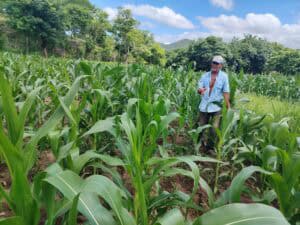
“Once the corn was completely dry, I managed to harvest 11.61 bushels out of the four pounds I planted. I think that double-row planting and the quality of the corn are very good – it is productive and hardy. The other corn I’ve always planted, even on a larger area, barely yielded 7.14 bushels, and we didn’t even eat corn on the cob from that corn.
“Another important thing to mention is the sweet flavor of the Nutrader corn, which makes it irresistible. My wife was delighted with the taste and texture.
“Because I saw that this corn variety works well and adapts more to my soil and our environment (which lacks consistent water and rainfall), I set aside time to collect, dry, and store corn seed from my best performing plants. I used the rest of the corn to feed the family and the animals, since corn is essential for us humans, as well as for the chickens and pigs.”
From the 10 pounds of INTA Biopante beans Teodoro received from Self-Help International, he yielded 4.46 bushels. “I planted the beans in the traditional way, now with a bit more confidence. Since I saw that the quality of the beans was good, I decided to save some for seed just like I did with my corn variety. The rest of the beans were for the family’s consumption, which will cover the need for the whole year. This has relieved my stress about ensuring the family’s food supply, as I no longer have to worry about finding beans elsewhere.
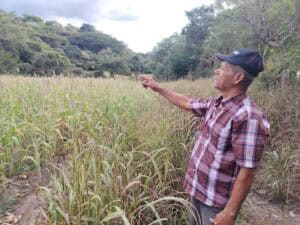
“I also received eight pounds of sorghum from Self-Help International, and from this amount I managed to harvest 4.46 bushels of sorghum. I noticed that this variety is early maturing and easy to thresh. I like this variety because it is drought-resistant and gives a good yield.”
As part of the Self-Help International Agriculture Program, farmers are expected to return twice the amount of seeds they received in order to strengthen the community seed bank. Not only did Teodoro uphold his commitment, he also gave some of his seed to his neighbors.
“I like to help people who want to make a change, just like me, and so I give them seed because I see their interest in having the same high-quality seed that I have,” says Teodoro. “I learned when I was young that those who save and care for their seeds don’t depend on anyone; rather, they are able to help others. Saving seeds has helped me ensure timely planting and high-quality grain. By following this process, I also have the opportunity and the goodwill to help other farmers by sharing my seeds with them. I always tell them to save their seeds so they don’t have to run around year after year looking for any seed variety at the market, because no one can guarantee whether they are of good quality or not. It’s difficult; people don’t want to learn how to save their seeds. But I’ve learned that saving is key.”
“I am grateful for the opportunity to have received these seeds from Self-Help International,” says Teodoro. “The seed varieties you promote are truly beneficial for this dry region where we live. My age no longer allows me to do many things, so I am happy with what I have achieved thanks to the project’s support. “
Powered by Wapiti Digital #servetheherd

This is my rich text.
This is more rich text.
I am a list
Lists are cool